Guide to Planting Strawberries
Very little can compare to the flavor and juiciness of a fresh strawberry. Despite being a ridiculously hardy plant, strawberries develop a reputation for being difficult due to grow due to one thing: how finicky they can be when planting. I have struggled many times in the past with planting strawberries, so I know how frustrating it can be to watch your plants shrivel and turn black. After hundreds of plants grown, I feel more confident with my ability to transplant strawberries and hope this guide will make you more successful as well. All you need to be successful with planting strawberries is some basic anatomy/physiology of the strawberry.
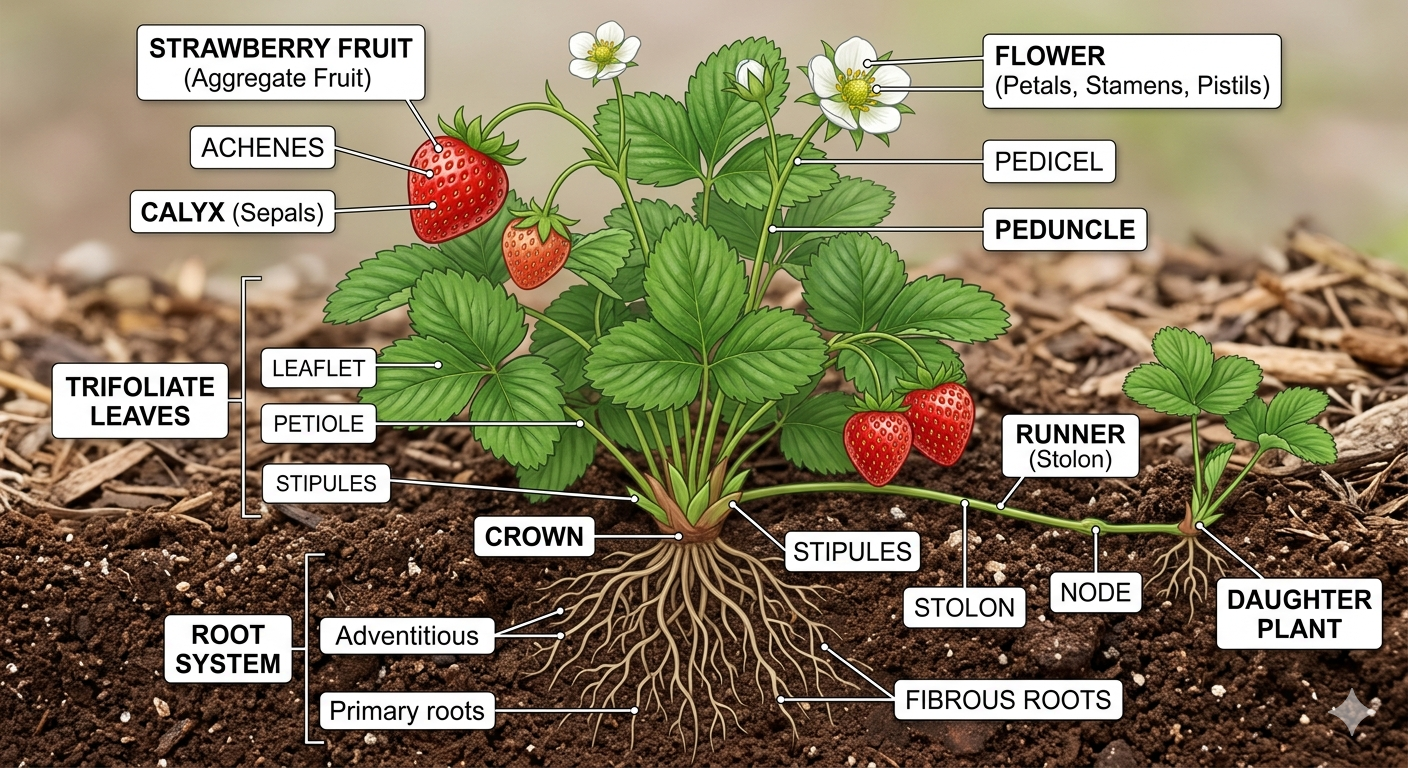
Don’t let all the fancy words intimidate you. The main thing we will be talking about is the crown: this is the main part of the plant that is “responsible” for making planting difficult. The crown is where all the leaves, flowers, and runners come out of the top and all the roots come out of the bottom. The crown will send out a runner that will then rest on top of the soil and send roots down into the ground. This is how a strawberry patch forms.
Strawberries are different than tomatoes or many vining plants that can set roots all along their trunks. Their crowns needs to rest on top of the soil. If they are planted too deep, the crown is going to rot, which results in black plants. If they are planted too high, the roots will dry out. Strawberry plants roots can be a bit sensitive to the soil’s water content and prefer a good even moisture. Strawberries even get their name from how much they love having a layer of straw to help keep the soil with a nice even moisture content.
That’s it. That is all you need to know about the strawberry plant’s anatomy and physiology to successfully plant it. Now let’s talk about planting. The goal of planting strawberries is to get the bottom of that crown right at soil level. When I am first transplanting them, I prefer to have the “shoulders” of the roots barely out of the soil and then covering with straw to help prevent drying out. If you are unsure about the planting depth, you can plant a couple different strawberries at different depths to see which one works best for you. From my experience, they spread so prolifically that it is ok if you lose one. As long as you are mindful of the root’s sensitivity to water (which includes the weather) your strawberry plants should be healthy and giving you plenty of tasty fruits in no time!
